Review · MUNICH
Superior E-Bike Tour incl. 3rd Reich Sites & a beer Garden Stop
Munich’s past comes into sharp focus when you pedal from Marienplatz to Königsplatz, linking royal squares, Nazi power sites, resistance memorials, and today’s ordinary city streets. This is not just a bike ride with a few historical plaques. The route shows how Munich became a center of Nazism, then worked to reclaim its public spaces.
I like the small group size, capped at 14, and the way an e-bike lets you cover far more ground than a walking tour. I also like the beer garden pause, which gives the serious subject matter room to breathe. The main caution is simple: this is a real bike tour. You need to know how to ride, follow traffic signals, and stay alert in city streets.
Key points to know before you book
- Five hours on an e-bike: You cover central Munich, Schwabing, and the English Garden without spending the whole day on foot.
- A serious Third Reich focus: The guide explains the Beer Hall Putsch, Nazi propaganda, resistance, and the changing meaning of places such as Königsplatz and Feldherrnhalle.
- A useful mix of history and city sights: You see Hofbräuhaus, the Residenz area, Haus der Kunst, the Jewish center at St-Jakobs-Platz, and the English Garden.
- Beer garden break included in the rhythm, not the price: Food and drinks cost extra, so carry some money for your pause.
- English-speaking guides vary: Simon, Jack, Will, and Chris have led tours, with strong praise for their clear explanations and friendly manner.
- Central start and finish: Meet at Marienplatz at 9:30 am and finish near Bräuhausstraße, close to central Munich.
Why a bike works for Munich’s difficult history
Munich is compact in the center, but the important sites are spread across several districts. On foot, you can see Marienplatz, Odeonsplatz, and the Residenz area well enough. Reaching Königsplatz, Schwabing, the English Garden, Haus der Kunst, and St-Jakobs-Platz in one morning is a different matter.
The bike solves that problem. You move at an easy pace, stop often, and hear the story where it happened. The e-bike matters most when you are crossing larger distances or when the group needs to keep a steady pace. You are not racing, but you are also not limited to a small pocket of downtown.
The subject is sober. Munich was an early center of the Nazi movement, and this route follows that rise through its buildings and squares. A good guide has to explain the facts without turning the tour into a lecture or a spectacle. Simon, Jack, Will, and Chris are among the guides associated with the experience, and the strongest comments about them point to clear explanations, warmth, and an upbeat manner that does not make light of the subject.
You should expect regular stops rather than a continuous ride. That is important because the value here comes from the commentary. The bike gets you from place to place, but the guide connects the sites.
More Beer Gardens and Oktoberfest Tours in Germany
- Classic Mike’s Bike Tour daily @ 11.30 incl Beer Garden & Surfers
★ 5.0 · 1,246 reviews - Munich: Guided City Tour by Bike with Beer Garden Stop
★ 4.7 · 604 reviews - Munich: Bike Tour with Beer Garden Break
★ 4.9 · 391 reviews
Marienplatz gives you the city’s starting point
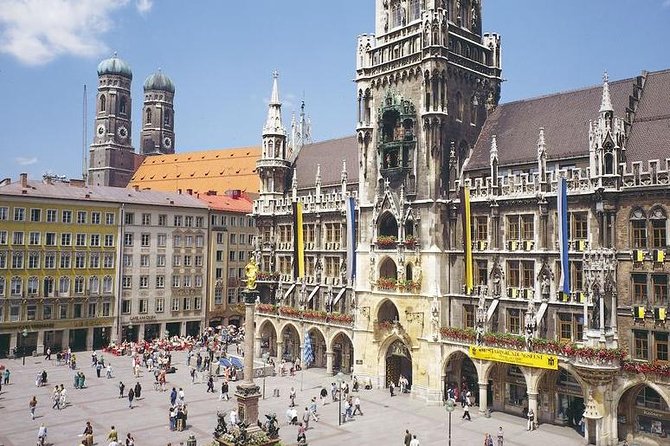
Meet at Marienplatz at 9:30 am. Cycling is not allowed across the square, so you first get an overview on foot before walking to the bikes. Allow about 15 minutes for this opening section.
Marienplatz is Munich’s natural orientation point, and beginning here helps you understand the city center before the tour turns to its darker chapters. You receive your bike and helmet, then set off at a relaxed pace.
This is also the moment to make sure the bike feels comfortable and that you understand the guide’s signals. If you are uneasy on a bike, do not wait until the group is moving to speak up.
Odeonsplatz and Feldherrnhalle explain the failed 1923 putsch
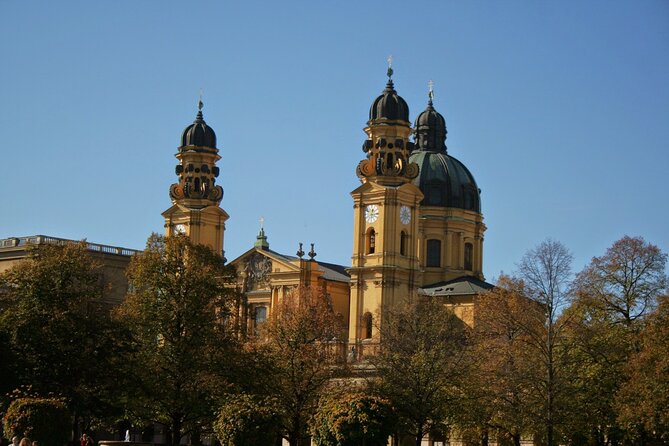
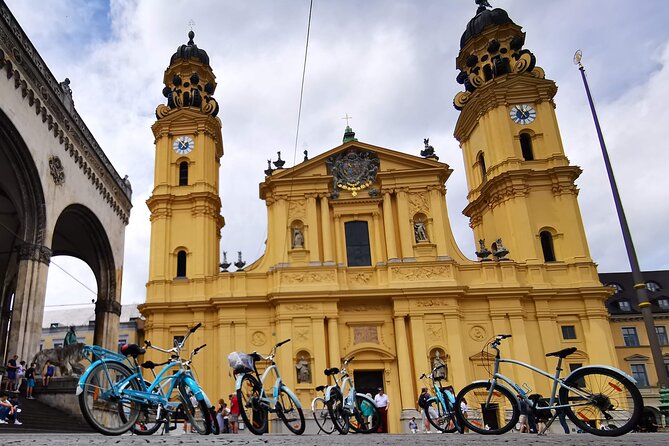
Odeonsplatz is one of the most important stops on the route. The square was created under King Maximilian I Joseph and is framed by the Theatinerkirche and the Feldherrnhalle, a grand loggia inspired by a building in Florence.
The square’s Nazi-era story is central. In 1923, Adolf Hitler and his supporters marched toward the Feldherrnhalle during the failed Beer Hall Putsch. A confrontation with Bavarian police led to deaths and arrests, but the event later became powerful Nazi propaganda.
Your guide can show how one place carried several meanings over time. It began as a royal and military monument, became a symbol used by the Nazi regime, and now functions as a public square where daily life continues. That contrast is one of the tour’s strengths.
The Feldherrnhalle deserves a quiet look. After the Nazis took power, it became a shrine to those killed in the putsch, and people were expected to give the Nazi salute there. The Nazi symbols are gone today, but the site still carries that memory.
Max-Joseph-Platz puts royal Munich beside political Munich
The short stop at Max-Joseph-Platz shifts the story toward Bavaria’s royal and cultural past. The square is named for King Maximilian I Joseph and sits beside the Residenz, the former royal palace.
You also see the National Theatre, home of the Bavarian State Opera. This is a useful pause because it shows the city before the Nazi period, when Munich was shaped by kings, court culture, music, and architecture.
The stop lasts about 10 minutes, so do not expect to tour the Residenz or enter the opera house. The point is the setting and the way the guide places political events within Munich’s wider civic story.
More Beer Gardens and Oktoberfest Tours in Munich
- Munich City Bike Tour + Beer Garden Lunch Stop
★ 5.0 · 283 reviews - Mini Classic Bike Tour @ 4pm incl. Beer Garden & Surfers 2,5 hrs
★ 5.0 · 251 reviews - Munich: Mini Classic Bike Tour with Beer Garden Stop at 4 PM
★ 4.8 · 28 reviews - All-inclusive Small Group Beer, Brewery & Oktoberfest Experience!
★ 5.0 · 20 reviews
Königsplatz reveals the machinery of Nazi spectacle
Königsplatz was created by King Ludwig I as a classical architectural space, with the Glyptothek and State Collection of Antiquities nearby. Its original purpose was tied to art, education, and the display of Greek and Roman culture.
The Nazis changed its public meaning. They used the square for rallies and propaganda events, while the nearby Brown House served as the Nazi Party headquarters. The site makes clear how the regime used architecture and ceremony to project power.
You spend about 20 minutes here, enough for a focused explanation and time to look around. The square is open and visually impressive, but its scale can make the Nazi rallies hard to imagine without a guide. This is one of the places where the commentary adds real value.
The tour also touches on resistance to the Third Reich. That matters because the story is not only about Nazi leaders and official buildings. Munich was also a place where people opposed the regime, and the route includes memorials and sites connected with that resistance.
Schwabing adds art, students, and a different Munich
Schwabing offers a change of tone. Once an independent village, it became part of Munich in the late 19th century and developed into a center for artists, writers, and intellectuals.
Names linked with the district include Wassily Kandinsky, Paul Klee, and Thomas Mann. By the early 20th century, Schwabing had a reputation for free thought, art, and unconventional living. After the war, it remained linked with students and counterculture.
Today, Schwabing is known for cafés, shops, restaurants, and nightlife. It is more polished than its bohemian past, but the district still gives you a useful break from formal squares and monumental buildings.
The stop lasts about 15 minutes. Think of it as context rather than a full neighborhood tour. You will not explore every side street, but you will see how Munich’s artistic identity fits beside its political history.
The English Garden gives the morning breathing room
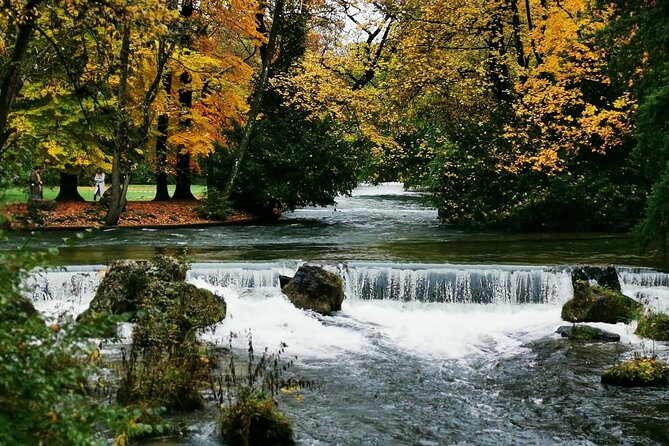
The English Garden is the longest stop, at about an hour, and that timing is welcome. This huge city park has bike paths, open meadows, the Chinese Tower, beer gardens, and the famous Eisbach wave, where surfers ride a permanent river wave.
The park was designed in the English garden style and is larger than New York’s Central Park. Here, Munich feels less like a city of palaces and political monuments. You get a sense of how locals use the city for exercise, rest, food, and time outdoors.
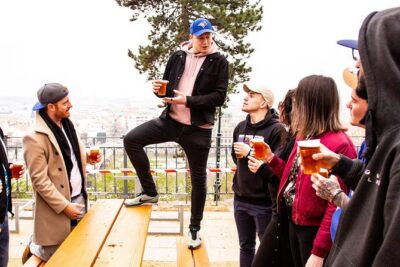
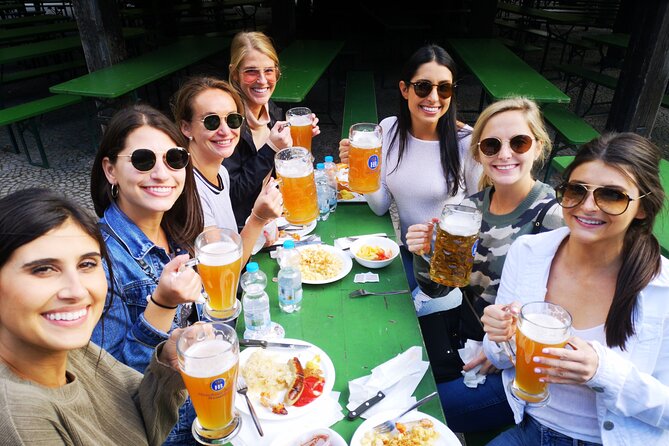
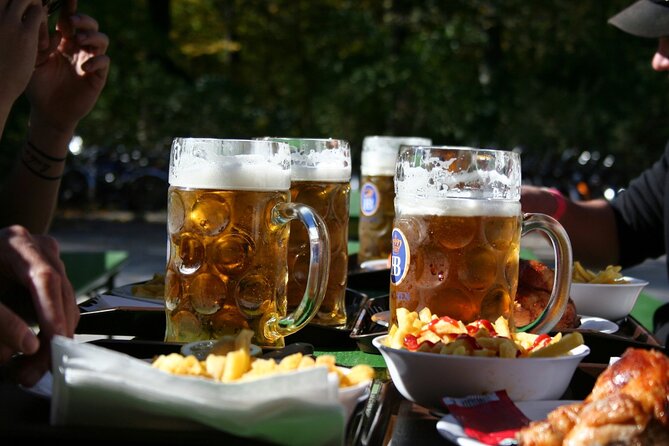
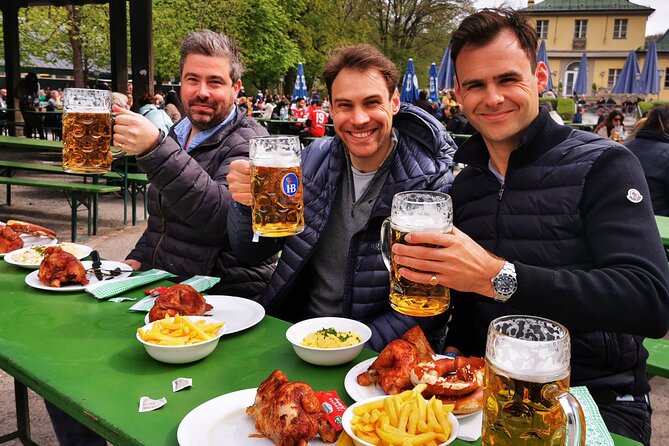
The beer garden pause is a practical highlight. Food and drinks are not included, so plan to pay for your own snack or refreshment. Bring some cash or another convenient payment method, but the supplied details do not specify which payment options are accepted.
The English Garden also breaks up the emotional weight of the tour. You can ask more questions, enjoy the scenery, and recover before returning to the historical stops. Still, remember that the full hour is part of a five-hour bike route. If you want a slow, extended beer garden meal, this may feel brief.
Haus der Kunst shows how art became political
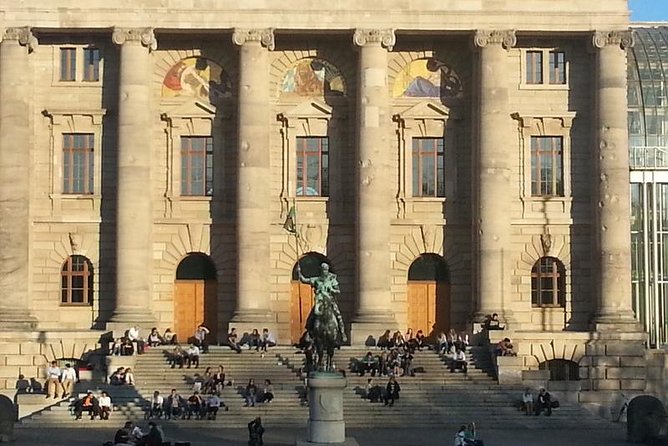
Haus der Kunst has one of the clearest links to Nazi cultural policy. Adolf Hitler commissioned the building, which opened in 1937 as the House of German Art. It was meant to present art approved by the regime while attacking work labeled degenerate.
Today, the building presents international contemporary art and takes part in serious discussion about art and society. Its current role does not erase its origin, and that tension makes the stop worthwhile.
The scheduled stop is only about five minutes, so expect an exterior explanation rather than a museum visit. Admission is not included because you do not go inside as part of this route. If the building interests you, return later on your own when you can give its exhibitions and history more time.
St-Jakobs-Platz connects Munich with Jewish life today
St-Jakobs-Platz is described as the Jewish heart of the city and is the site of the new Jewish Synagogue. Including it gives the tour a needed present-day focus.
A tour centered on Nazism can become too fixed on the perpetrators and their monuments. This stop helps shift attention toward Jewish life in Munich now, while also acknowledging what the Nazi period destroyed.
The supplied timing does not give a separate duration for this stop, so expect it to fit into the route rather than function as a long visit. You should not expect synagogue entry or an interior tour unless the guide specifically says otherwise.
What the five-hour format feels like
The tour begins with short stops at Marienplatz, Odeonsplatz, Max-Joseph-Platz, and Königsplatz. Schwabing adds another brief pause, while the English Garden takes about an hour. Haus der Kunst and Feldherrnhalle are shorter visits, with time spent listening rather than entering buildings.
The result is a broad city tour with a clear historical thread. You see many famous Munich sights in one outing, but you do not get long museum visits or extended time inside monuments. I would choose this format if you want orientation and interpretation. I would not choose it as your only plan for seeing the Residenz, Haus der Kunst, or any other indoor attraction.
The maximum group size is 14. That is small enough for questions and easier street movement, while still large enough that you should stay close to the guide at crossings and stops.
Price, equipment, and practical value
At $93.92 per person, the tour is not the cheapest way to see Munich. The price includes the professional guide, bike, and helmet, but not food, drinks, hotel pickup, or drop-off.
I think the value depends on how much ground you want to cover. A walking tour can handle the central squares at a lower cost, but it will not cover this range of sites as efficiently. A self-guided bike rental may cost less, but you would lose the explanations that link the Beer Hall Putsch, Nazi propaganda, resistance, Jewish life, and Munich’s modern identity.
The five-hour length also gives the price some weight. You are paying for a half-day, not a quick ride. The English-speaking guide is the main reason to book it, while the e-bike is the tool that makes the wide route possible.
Wear comfortable clothes and shoes. Bring rain gear, and use sunscreen in summer. You do not need to bring a bike or helmet, since both are provided.
Who should book this Munich e-bike tour?
I would recommend it to you if you want a serious introduction to Munich’s Nazi-era history but also want to see the city beyond memorials and lecture rooms. It fits first-time visitors who want to cover major sights quickly, as well as repeat visitors who want more context for places they may have already seen.
It suits confident cyclists who can follow traffic signs and ride in a group. One practical warning deserves emphasis: you need to know how to ride a bike. Green means go and red means stop. That sounds basic, but city cycling requires attention, especially when the group is moving between busy areas.
The tour may be less suitable if you dislike cycling, want a private experience, or prefer long visits inside museums. It is also not ideal if you need hotel pickup, since you must make your own way to Marienplatz.
You can cancel for a full refund up to 24 hours before the 9:30 am start. Changes or cancellations made less than 24 hours ahead are not accepted for a refund.
Should you book it?
Book this tour if you want Munich’s major historical sites explained in one efficient half-day, with enough cycling to connect the center, Königsplatz, Schwabing, the English Garden, Haus der Kunst, and St-Jakobs-Platz.
Skip it if you are not comfortable on a bike or if you want a quiet, indoor history lesson. For the right rider, the combination is strong: serious history, a friendly English-speaking guide, a small group, a beer garden pause, and a much wider look at Munich than you can manage on foot.
FAQ
How long does the e-bike tour last?
The tour lasts approximately five hours.
What time does the tour begin?
It starts at 9:30 am.
Where does the tour meet?
The meeting point is Munich Stories at Marienplatz 15, 80331 Munich, Germany.
Where does the tour finish?
It finishes at the Discover Bavaria Shop near the corner of Hochbrückenstrasse and Bräuhausstraße 10, 80331 Munich.
Are a bike and helmet included?
Yes. The tour includes use of a bike, helmet, and professional guide.
Is food included at the beer garden stop?
No. Food and drinks are not included unless specifically stated, so you pay for your own snacks and beverages.
Is the tour offered in English?
Yes. The tour is offered in English.
How far in advance can I cancel for a full refund?
You must cancel at least 24 hours before the experience start time for a full refund. Changes or cancellations made less than 24 hours before the start are not accepted for a refund.
More Brewery Bike Tours in Munich
- THE Wilmington History, Haunts & Breweries E-Bike Tour (4 hr)
★ 5.0 · 113 reviews - 3-Hour E-Bike Sightseeing and Breweries Tour in Roanoke
★ 5.0 · 66 reviews - Portland Oregon Breweries By Bike and E-bike
★ 5.0 · 55 reviews - Soweto Food & Beer Bike Tour
★ 4.9 · 40 reviews
More Brewery Bike Tours in Germany
- Private Munich Bike Tour: Flexible Times & Beer Garden Stop
★ 5.0 · 15 reviews - Private Highlights of Munich Bike Tour with Beer Garden Stop
★ 5.0 · 3 reviews - Berlin City Bike Tour with Beer Garden Stop
★ 5.0 · 917 reviews - Berlin City Bike Tour with Beer Garden Stop
★ 4.9 · 308 reviews
Freshly tapped around Munich
- Private Neuschwanstein Castle and Brewery Tour★ 4.0 · 6 reviews
- Self-guided Beer-Tour of Munich: Main Sights, Beer & Breweries★ 5.0 · 4 reviews
- Private Highlights of Munich Bike Tour with Beer Garden Stop★ 5.0 · 3 reviews
- Brewing Through the Ages: A Tour of Munich’s Beer Culture★ 5.0 · 8 reviews
- Legendary Breweries of Munich: Self-Guided Puzzle Walk★ 4.5 · 7 reviews
- Living Deliberately Today Munich Beer Tours★ 5.0 · 14 reviews
- Munich Beer Tour with a Local Beer Expert★ 5.0 · 2 reviews
- All-inclusive Small Group Beer, Brewery & Oktoberfest Experience!★ 5.0 · 20 reviews
Beer Gardens and Oktoberfest Tours, compared.
Classic Mike’s Bike Tour daily @ 11.30 incl Beer Garden & Surfers
Read our review →
Munich: Guided City Tour by Bike with Beer Garden Stop
Read our review →
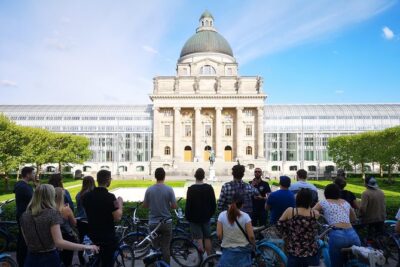
Mini Classic Bike Tour @ 4pm incl. Beer Garden & Surfers 2,5 hrs
Read our review →
Omiš: 2-Hour Cetina River Glassboat And Beer Garden Visit
Read our review →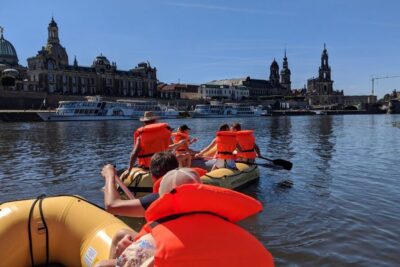
Dresden: Private Inflatable Boat Tour with Beer Garden Stop
Read our review →